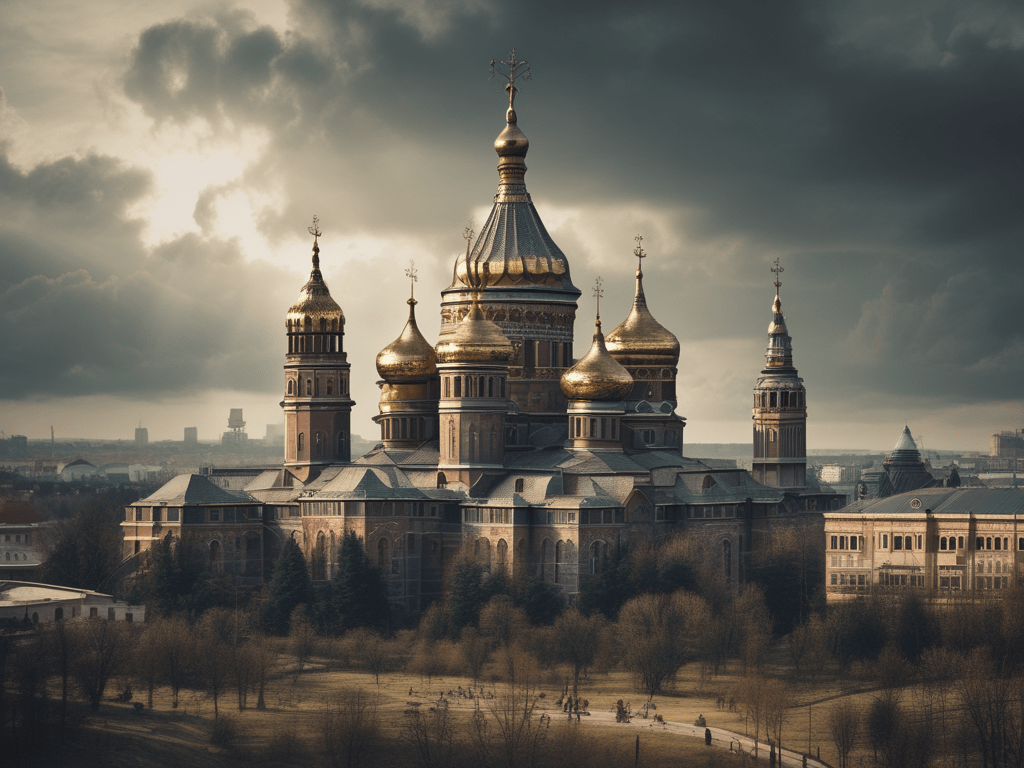
Medieval Russian history is a rich tapestry woven from the threads of conquest, culture, and conflict. Spanning centuries, this era saw the rise and fall of mighty kingdoms, the clash of civilizations, and the emergence of a distinct Russian identity. From the legendary beginnings of Kievan Rus’ to the splendor of the Moscow principality, the medieval period laid the foundation for modern Russia.
The Birth of Kievan Rus’:
The story of medieval Russia begins in the 9th century with the legendary figure of Rurik, a Varangian warrior who established the Rurik dynasty. Rurik’s arrival in Novgorod marked the beginning of Kievan Rus’, a loose federation of Slavic tribes and Norse settlers. Under Rurik’s successors, especially Prince Oleg and his grandson Vladimir the Great, Kievan Rus’ expanded its influence through conquest and diplomacy. Vladimir’s conversion to Orthodox Christianity in 988 CE not only transformed the religious landscape but also solidified ties with the Byzantine Empire, paving the way for cultural and religious integration.
The Golden Age of Kiev:
The 10th and 11th centuries are often regarded as the golden age of Kievan Rus’. Kiev, the capital city, flourished as a center of trade, culture, and learning. The ruling princes, such as Yaroslav the Wise, enacted laws, promoted education, and commissioned magnificent churches like the Saint Sophia Cathedral. However, internal strife and succession disputes weakened Kievan Rus’ over time, leading to fragmentation and vulnerability to external threats.
The Mongol Invasion:
In 1240, the Mongol hordes, led by Batu Khan, swept across the Russian plains, devastating cities and laying waste to the countryside. The Mongol invasion, known as the Mongol-Tatar Yoke, subjected Russian principalities to tribute and control under the Golden Horde. While the Mongol domination stifled political autonomy and economic growth, it also fostered cultural exchanges and technological advancements, such as the introduction of gunpowder and improved metallurgy.
The Rise of Moscow:
Amidst the chaos of Mongol rule, the principality of Moscow emerged as a pivotal player. Through astute diplomacy and military prowess, Moscow’s rulers, notably Ivan III, gradually asserted their dominance over neighboring principalities and challenged the Mongol overlords. The pivotal moment came in 1480 when Ivan III refused to pay tribute to the Golden Horde, effectively declaring Moscow’s independence. This marked the beginning of Moscow’s ascendancy as the political and cultural center of Russia.Legacy and Impact:
The medieval period laid the groundwork for the formation of the Russian state and identity. It forged a synthesis of Slavic, Norse, and Byzantine influences, shaping Russian language, religion, and culture. The legacy of Kievan Rus’ endures in the collective memory of the Russian people and in the architectural wonders of cities like Kiev and Novgorod. The trauma of Mongol rule left scars but also spurred resilience and unity among the Russian principalities, paving the way for Moscow’s rise to power.
Medieval Russian history is a testament to the enduring spirit of a people shaped by conquest and resilience. From the legendary origins of Kievan Rus’ to the rise of Moscow, this period saw the ebb and flow of power, the clash of civilizations, and the forging of a distinct Russian identity. As we reflect on this tumultuous era, we gain insights into the forces that shaped modern Russia and appreciate the enduring legacy of its medieval past.
 Cross College
Leave a comment